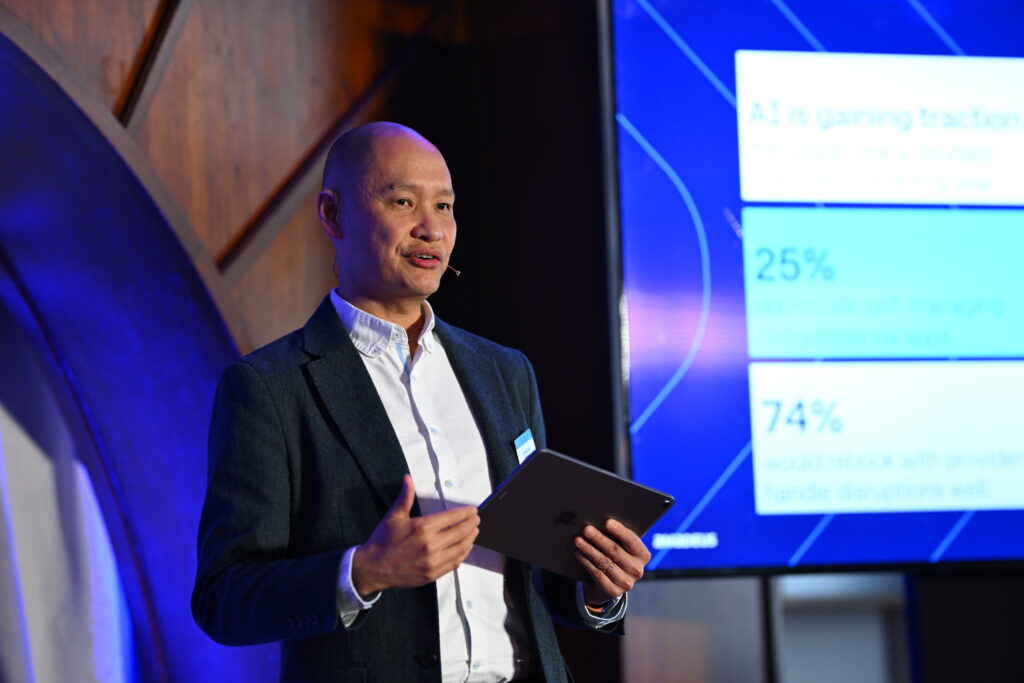
Jonathan Tong, Senior Vice President, Airlines, Southeast Asia, India subcontinent and Greater China at Amadeus media event.
From AI trip assistants to biometric gateways, Singapore travellers are redefining the future of flying — embracing innovation, but never at the cost of reliability.
If there’s a country that lives and breathes technology, it’s Singapore. So it’s hardly surprising that its travellers are leading the charge in digital transformation — not just at home but across airports and airlines worldwide.
According to a new global study by Amadeus, titled Connected Journeys: How Technology Will Transform Travel in the Next Decade, Singapore travellers are outpacing global averages in adopting travel technology, blending curiosity for innovation with an insistence on reliability.
Singapore: The digital traveller’s playground
Singapore’s reputation as a “Smart Nation” extends seamlessly to the way its people travel. The study found that 79% of Singapore respondents are ready to use biometric gateways — facial recognition and digital identity tools — to replace repetitive document checks at check-in, immigration, and boarding.
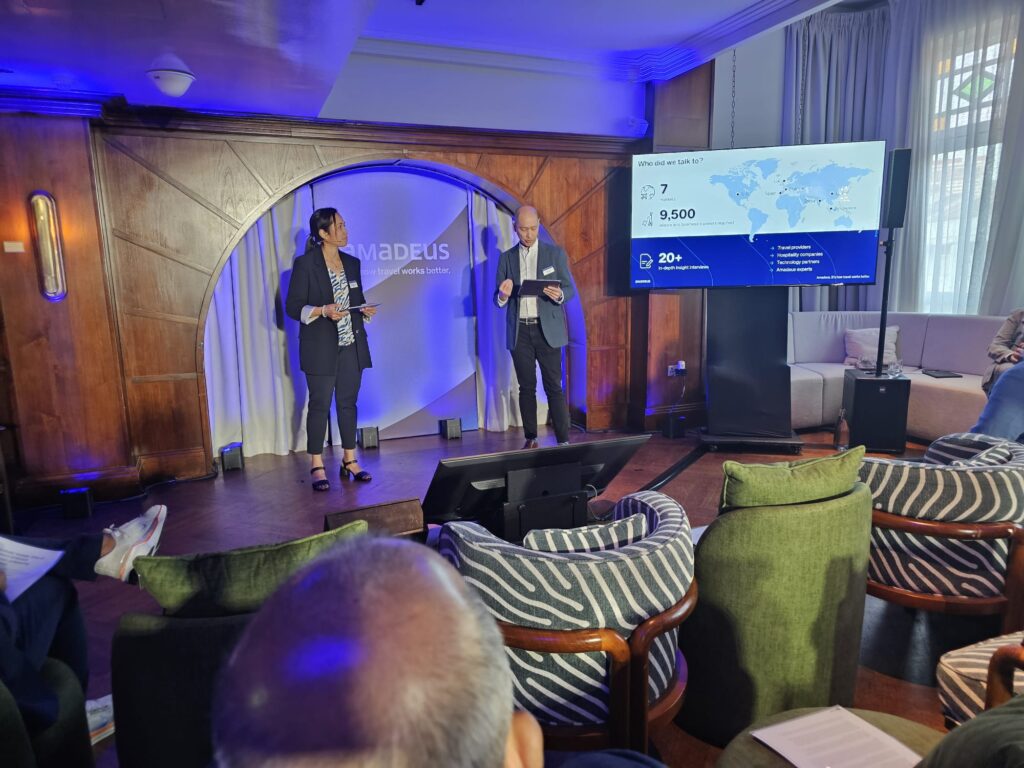
Ramona Bohwongprasert, Senior Vice President, India, Southeast Asia & Inside Sales, Travel Sellers, Asia Pacific (left) and Jonathan Tong, Senior Vice President, Airlines, Southeast Asia, India subcontinent and Greater China (right) at Amadeus media event.
That’s well above the global average of 69%, a sign of how comfortable Singaporeans are with frictionless, tech-driven journeys.
Beyond convenience, travellers want control. Thirty-six percent of respondents said they would use biometric security to speed up queues, while 33% want real-time traffic and arrival updates.
Interestingly, six in ten (62%) would prefer to check in luggage from home rather than at the airport, reflecting a growing appetite for automation and remote travel management.
“Singaporeans have become digital travelers by instinct,” says Javier Laforgue, Executive Vice President and Managing Director for Amadeus Asia Pacific. “They want smarter, faster, more personalised journeys — but also reassurance that technology won’t fail them when they need it most.”
The rise of the “super app” traveller
It’s not just biometrics transforming the journey. The research highlights a demand for connected ecosystems — where all travel data lives in one place.
About one in three Singaporeans (32%) say they’d prefer a single super app that consolidates flight updates, hotel bookings, and transport arrangements.
Among business travellers, the number rises slightly to 34%, with 32% citing smart luggage tracking as a must-have for peace of mind.
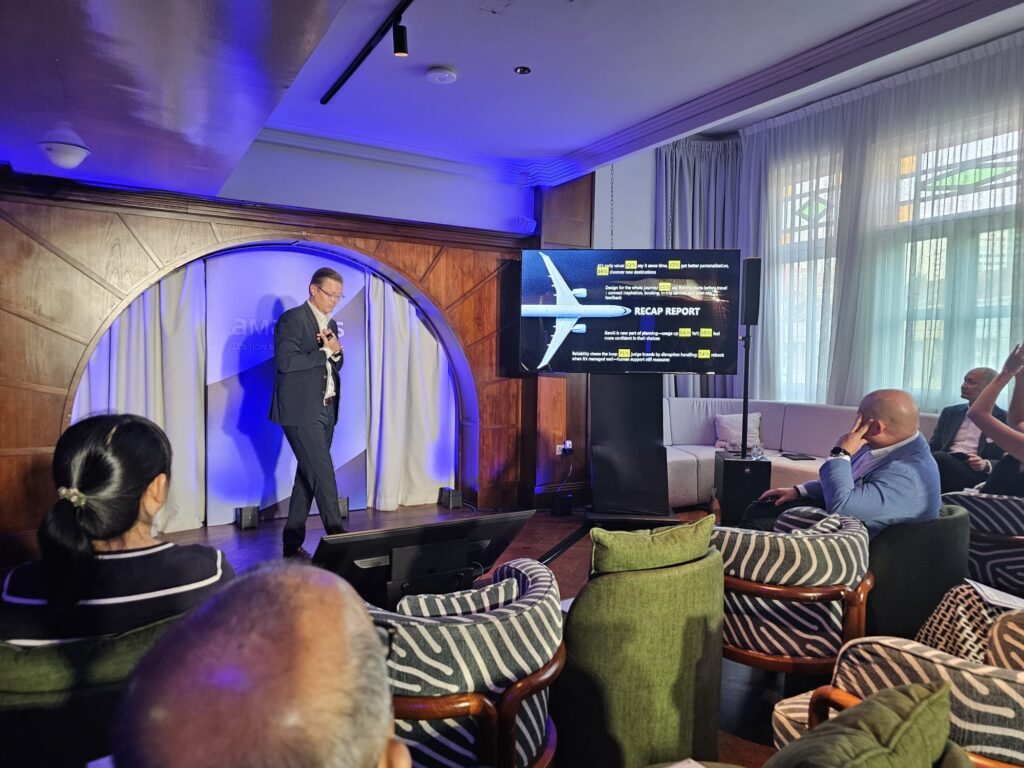 Generative AI goes mainstream
Perhaps the most striking shift is the rapid adoption of Generative AI. The proportion of travellers using AI tools to plan or manage their trips has almost doubled, rising from 11% in 2024 to 20% this year.
Of those who already use AI, 92% reported tangible benefits — saving time (43%), creating itineraries (37%), and discovering new destinations (35%).
Among business travellers, 83% said they would find an AI trip assistant useful for scheduling, expense management, or last-minute rebookings.
Still, the human touch remains essential. Over 61% of respondents said they’ve faced difficulties with AI travel tools — from being overwhelmed by too many options (28%) to encountering inaccurate or confusing information (26%).
“Even in a digital age, travellers want technology that feels intuitive, not intimidating,” says Laforgue.
Reliability: The true currency of loyalty
Amadeus’ findings reveal that while Singapore travellers eagerly embrace innovation, reliability remains the cornerstone of trust.
A staggering 91% of respondents reported experiencing some level of anxiety during air travel — from flight delays to missed connections. What separates loyal customers from the rest, it turns out, is how providers handle disruptions.
About 76% said they would rebook with airlines or agencies that manage disruptions transparently and efficiently. For them, good technology is not just about convenience — it’s about confidence.
“Technology builds trust when it’s dependable,” Laforgue notes. “The most forward-thinking travellers still value reassurance. It’s about blending automation with empathy.”
Balancing AI with the human touch
While Singapore travellers are comfortable with AI tools, they still value human assistance in times of uncertainty. The study found:
33% appreciate quick rebooking functions.
29% want self-service disruption management through mobile apps.
30% still prefer to speak to a human agent.
Half said they would rather wait hours for a person than get instant help from an AI chatbot.
Business travellers, in particular, expect proactive communication. Seventy-one percent favor providers with dedicated contact channels, while 76% appreciate outreach during disruptions — whether through a text, app alert, or personal call.
 A country comfortable with experimentation
In a region that thrives on digital progress, Singapore serves as a natural testbed for travel technology. The city-state’s airports already feature biometric boarding, contactless immigration, and AI-powered crowd management systems, blending seamlessly into daily life. It’s no wonder its travelers are among the most tech-savvy globally.
But as Amadeus’ report makes clear, innovation must walk hand-in-hand with reliability. When technology simplifies journeys without sacrificing trust, it earns loyalty.
The decade ahead
Looking to the next decade, Amadeus predicts travel will become an increasingly hybrid experience — a blend of automation, personalisation, and human care.
Providers who can offer that balance will win over the Singapore traveller, whose expectations continue to evolve faster than most.
The challenge is no longer whether travellers will adopt new technologies — they already have. It’s whether the systems behind them can deliver consistently, securely, and empathetically.
As Laforgue sums up: “The future of travel isn’t just smarter — it’s steadier. Singapore travellers remind us that the best technology works quietly in the background, letting the joy of the journey take center stage.”
The Amadeus study, conducted by Opinium between June 4 and June 20, 2025, surveyed 500 Singaporeans who travel abroad at least once a year. It forms part of a global research effort exploring how technology will shape travel experiences in the coming decade.
Learn more about Amadeus at www.amadeus.com.